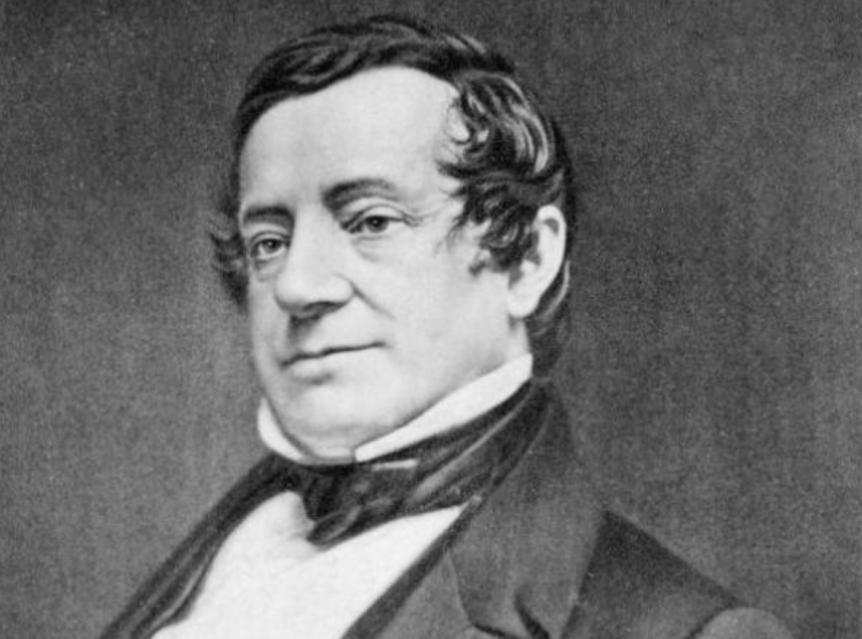
From legendary industrialists and literary giants to pioneering philanthropists, discover the remarkable people resting in one of America’s most historic cemeteries.


Just 30 miles north of Manhattan, nestled along the Hudson River in the historic village of Sleepy Hollow, lies one of New York’s most fascinating burial grounds: Sleepy Hollow Cemetery.
Established in 1849 as Tarrytown Cemetery and renamed Sleepy Hollow Cemetery in 1865, this beautiful 90-acre landscape is much more than a final resting place. It is an outdoor museum of American history, architecture, literature, and extraordinary wealth.
Beneath its towering trees and elaborate stone monuments rest some of the most influential figures of the 19th and early 20th centuries. Their stories helped shape New York City and, in many cases, the entire nation.
Here are seven famous people buried in Sleepy Hollow Cemetery whose legacies continue to influence American life today.
1. Washington Irving (1783–1859)
The author who made Sleepy Hollow immortal.

Long before Sleepy Hollow became a destination for Halloween enthusiasts, Washington Irving transformed the quiet Hudson Valley into a landscape of mystery and legend.
Irving was one of America’s first internationally celebrated authors, best remembered for The Legend of Sleepy Hollow(1820), the haunting story of Ichabod Crane and the Headless Horseman. He also wrote Rip Van Winkle, another enduring tale set in the Hudson Valley.
His beloved home, Sunnyside, still stands nearby as a historic landmark.
Irving died in 1859 and was buried in his family’s plot at Sleepy Hollow Cemetery. His grave remains one of the cemetery’s most visited sites.
Why he matters: Irving helped establish a distinctly American literary identity and made Sleepy Hollow internationally famous.
2. Andrew Carnegie (1835–1919)
The steel magnate who gave away a fortune.


Andrew Carnegie was one of the wealthiest men in American history, but his greatest legacy may be what he did with his fortune.
Born in Scotland, Carnegie immigrated to the United States as a child and eventually built a steel empire that helped fuel America’s industrial expansion.
In 1901, he sold Carnegie Steel to J. P. Morgan in a transaction that helped create U.S. Steel. He subsequently devoted much of his wealth to philanthropy.
Carnegie financed the construction of thousands of public libraries, supported universities, and established institutions including Carnegie Hall and the Carnegie Corporation of New York.
Despite his extraordinary fortune, his grave in Sleepy Hollow Cemetery is relatively modest.
Why he matters: Carnegie helped shape industrial America while transforming philanthropy, education, and access to public libraries.
3. William Rockefeller (1841–1922)
The oil tycoon behind one of America’s greatest fortunes.

William Rockefeller, the younger brother of John D. Rockefeller, was a powerful businessman and co-founder of the Standard Oil enterprise.
Although his older brother became the more famous name, William played an important role in building one of the largest corporate fortunes of the Gilded Age.
His business interests extended beyond petroleum into banking, railroads, and mining. He also maintained close connections to New York’s financial establishment.
Rockefeller’s grand mausoleum at Sleepy Hollow Cemetery reflects the extraordinary wealth and architectural ambitions of America’s industrial elite.
Why he matters: His career illustrates the rise of corporate capitalism and the enormous influence of wealthy industrial families on New York’s economy.
4. Walter Chrysler (1875–1940)
The automobile pioneer whose name towers over Manhattan.


Walter P. Chrysler was a self-made industrialist who became one of the most important figures in American automobile manufacturing.
After working in the railroad industry and at Buick, Chrysler established the Chrysler Corporation in 1925. His company became one of Detroit’s major automobile manufacturers.
His legacy is also permanently etched into the New York City skyline.
Completed in 1930, the Chrysler Building was commissioned by Walter Chrysler as a personal real estate investment and designed by architect William Van Alen. Its gleaming Art Deco crown, stainless-steel ornamentation, and automotive-inspired details made it one of the most recognizable skyscrapers in the world.
Chrysler was buried in Sleepy Hollow Cemetery following his death in 1940.
Why he matters: Chrysler revolutionized American automobile manufacturing and left New York with one of its greatest architectural landmarks.
5. Elizabeth Arden (1878–1966)
The beauty entrepreneur who built a global empire.


Elizabeth Arden, born Florence Nightingale Graham in Canada, helped transform cosmetics from a niche luxury into a major international industry.
After moving to New York, she opened her first salon on Fifth Avenue in 1910. Her signature red door became synonymous with luxury, elegance, and beauty.
Arden developed innovative skincare products, expanded internationally, and built a business empire at a time when women faced substantial obstacles in the corporate world.
Her success made her one of the most influential female entrepreneurs of the 20th century.
She died in 1966 and was buried at Sleepy Hollow Cemetery under her birth name, Florence Nightingale Graham.
Why she matters: Arden helped redefine the beauty industry and demonstrated how a woman-led business could become an internationally recognized brand.
6. Samuel Gompers (1850–1924)
The labor leader who fought for America’s workers.


Samuel Gompers played a central role in the development of the American labor movement.
Born in London, Gompers immigrated to New York as a teenager and worked as a cigar maker. His experiences in the workplace helped shape his lifelong commitment to organized labor.
In 1886, he became the first president of the American Federation of Labor, serving for most of the remainder of his life.
Gompers advocated for higher wages, shorter working hours, safer working conditions, and the right of workers to organize.
His influence helped establish labor unions as a major force in American economic and political life.
Why he matters: Gompers helped lay the groundwork for many workplace protections that Americans benefit from today.
7. Brooke Astor (1902–2007)
The philanthropist who helped preserve New York City’s cultural heritage.


Brooke Astor was one of New York City’s most celebrated philanthropists and social figures.
As the widow of Vincent Astor, she inherited responsibility for the Vincent Astor Foundation, which became a major source of support for New York’s cultural and charitable institutions.
She helped direct funding toward the New York Public Library, the Metropolitan Museum of Art, neighborhood organizations, and numerous community initiatives.
Unlike some wealthy benefactors who focused exclusively on elite institutions, Astor became known for supporting organizations that served ordinary New Yorkers.
She died at age 105 in 2007 and was buried in the Astor family plot at Sleepy Hollow Cemetery.
Why she matters: Astor demonstrated how private wealth could help sustain New York City’s libraries, museums, public spaces, and community institutions.
Visiting Sleepy Hollow Cemetery: A Walk Through New York History


One of the most remarkable aspects of Sleepy Hollow Cemetery is its architecture. Elaborate family mausoleums, Gothic-inspired monuments, classical columns, and intricate stone carvings reflect the artistic tastes and immense fortunes of the Gilded Age.
For visitors interested in New York real estate and architecture, the cemetery offers an unusual perspective on the families who financed railroads, built skyscrapers, established major corporations, and helped create the modern metropolis.
The cemetery is also a beautiful place to visit during October, when autumn foliage transforms the grounds into a landscape worthy of Washington Irving’s famous ghost story.
Address: 540 North Broadway, Sleepy Hollow, NY 10591
Visiting hours: Daily, 8:00 AM–4:30 PM
Telephone: 914-631-0081
Visitors can explore independently or join guided walking tours that cover the cemetery’s history, architecture, and famous residents.
Final Thoughts: Where New York’s Legends Rest
Sleepy Hollow Cemetery is more than a collection of gravestones. It is a remarkable record of the individuals who shaped American literature, business, labor, philanthropy, and architecture.
From Washington Irving’s haunting stories to Walter Chrysler’s iconic Manhattan skyscraper, each person buried here represents a chapter in New York’s extraordinary history.
Their lives remind us that the story of New York is not written only in its buildings and streets, but also in the legacies of the people who helped create them.
And in Sleepy Hollow, those stories are still waiting to be discovered.
At Stephen P. Wald Real Estate Associates, Inc., we believe every New York neighborhood, landmark, and historic property has a story worth telling. Since 1985, our boutique brokerage has celebrated the architecture, history, and character that make New York extraordinary.