Part I — Origins & Early Ambition
1. American Surety Building (1896)


Designed by Bruce Price, the American Surety Building is widely regarded as one of New York City’s first true skyscrapers. Built for the American Surety Company, it employed a steel-frame structure that allowed it to rise far higher than masonry construction would have permitted. At the time, its height alone signaled a turning point in commercial architecture.
Stylistically Beaux-Arts, the building still clung to classical composition, with ornamentation used to soften the radical new idea of verticality. It represents a moment when New York was cautiously testing how far upward commerce could go — and discovering there was no real ceiling.
2. Park Row Building (1899)


When completed, the Park Row Building was the tallest building in the world, announcing New York as the global capital of vertical ambition. Designed by R.H. Robertson for the Park Row Construction Company, it stood directly across from City Hall, asserting private enterprise’s dominance over civic scale.
Its Beaux-Arts detailing masked an aggressively modern steel skeleton. For a brief period, Lower Manhattan — not Midtown — was the epicenter of skyscraper innovation, and Park Row was its undisputed crown.
3. Flatiron Building (1902)


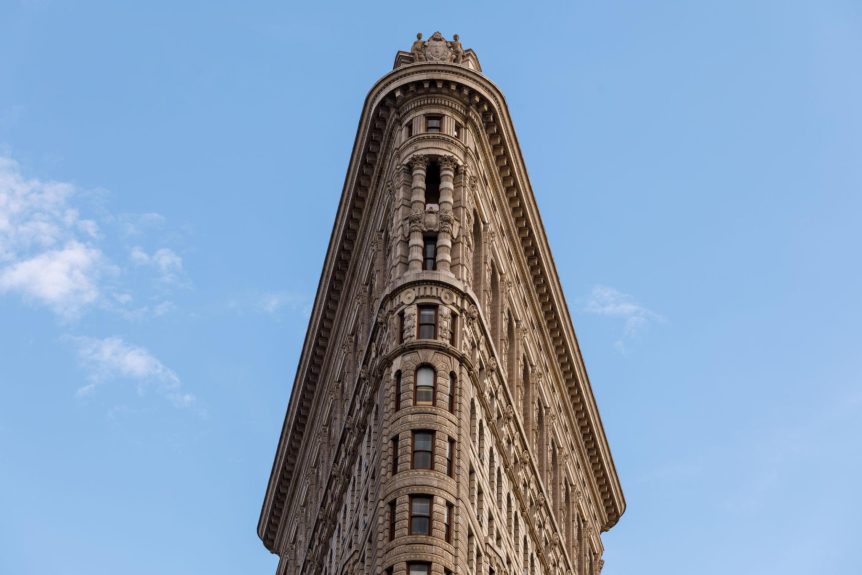
The Flatiron Building transformed an awkward triangular lot into one of the most recognizable buildings in the world. Designed by Daniel Burnham & Co. for the Fuller Company, it rose like the prow of a ship at the intersection of Fifth Avenue and Broadway.
Although Beaux-Arts in style, its daring shape symbolized a city learning to embrace architectural experimentation. Newspapers mocked it, artists adored it, and the public never stopped staring. The Flatiron proved skyscrapers could be both practical and poetic.
4. Whitehall Building (1904)

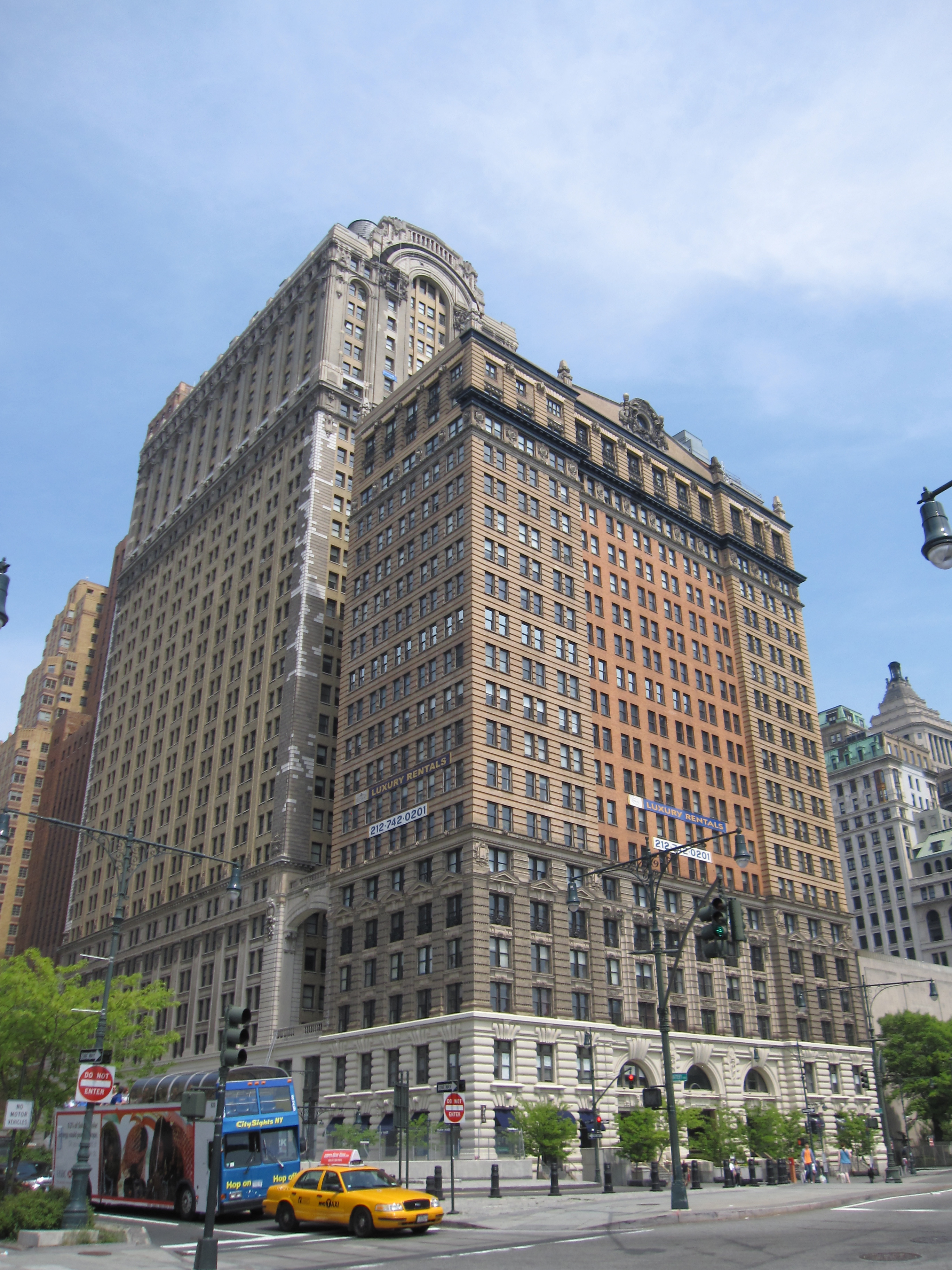
The Whitehall Building was among the earliest skyscrapers built specifically for residential use. Developed by the Whitehall Construction Company, it stood near the Battery, offering luxury apartments with views of the harbor — a radical concept at the time.
Its Beaux-Arts façade lent familiarity to a novel idea: vertical living. The Whitehall Building foreshadowed New York’s eventual embrace of high-rise residential towers, decades before they became commonplace.
5. Metropolitan Life Tower (1909)


Inspired by St. Mark’s Campanile in Venice, the Metropolitan Life Tower translated European historicism into American corporate symbolism. Designed by Napoleon LeBrun & Sons for Metropolitan Life Insurance Company, it became the tallest building in the world upon completion.
The tower expressed stability, permanence, and trust — critical qualities for an insurance firm. Its clock faces and commanding presence turned corporate architecture into a form of branding long before the term existed.
6. Woolworth Building (1913)


The Woolworth Building remains one of the most celebrated skyscrapers ever built. Designed by Cass Gilbert and funded entirely in cash by F. W. Woolworth, it fused Gothic cathedral imagery with modern steel-frame construction.
Nicknamed the “Cathedral of Commerce,” the building treated capitalism with religious reverence. Gargoyles caricatured businessmen, while soaring arches framed corporate ambition as a moral triumph. It redefined what a skyscraper could represent.
7. Manhattan Municipal Building (1914)


Designed by McKim, Mead & White, the Manhattan Municipal Building proved that skyscrapers were not solely the domain of private capital. Built for the City of New York, it centralized municipal offices in a single monumental structure.
Beaux-Arts in style and civic in spirit, the building bridged boroughs and functions, asserting that government could operate at the same scale as Wall Street — and sometimes larger.
8. Fred F. French Building (1927)

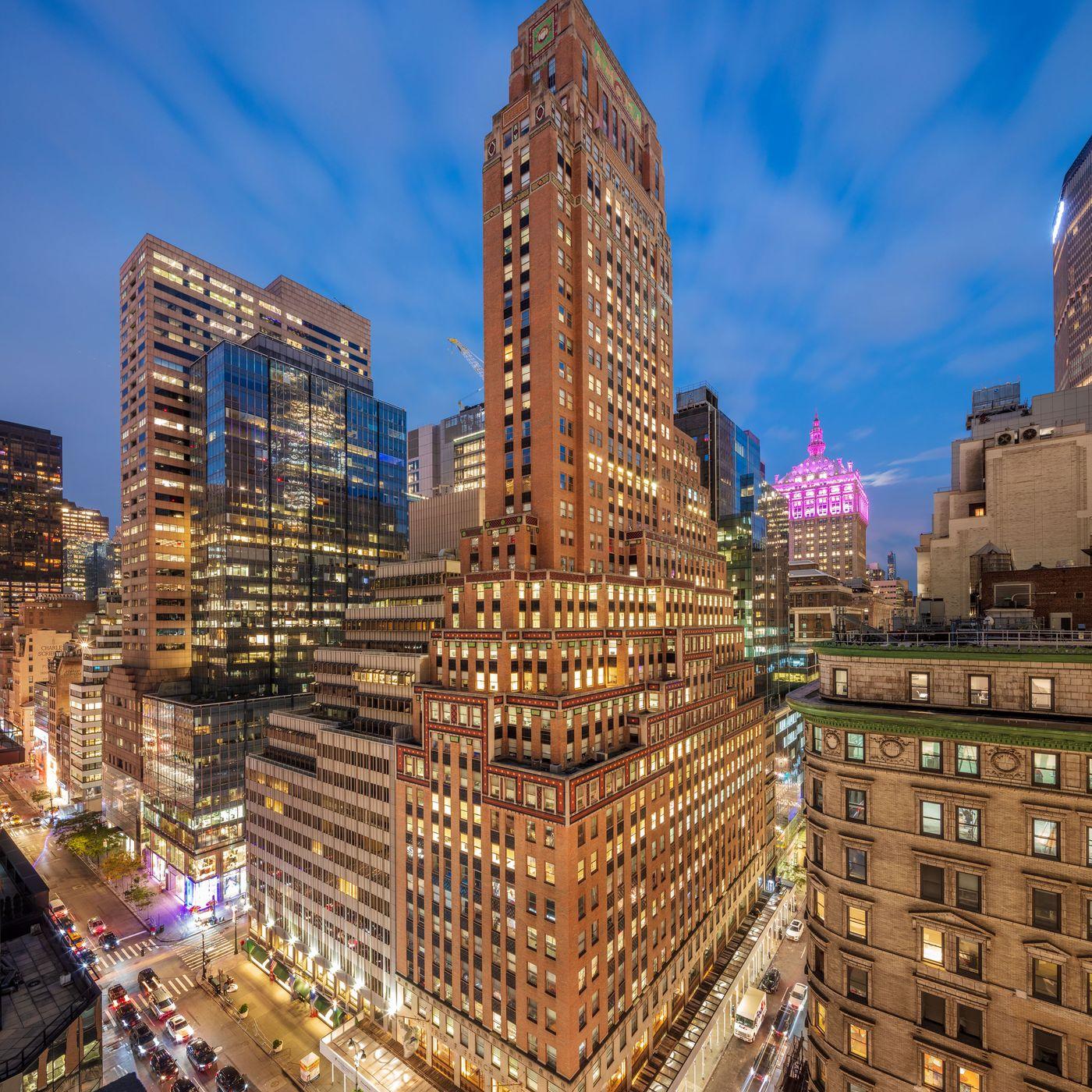
Developed by Fred F. French Companies and designed by H. Douglas Ives, this Neo-Gothic tower rose as part of Midtown’s eastward expansion. Its dark masonry and vertical emphasis reflected the lingering influence of Gothic romanticism.
The building represents speculative optimism — a belief that Midtown would soon eclipse downtown as the city’s commercial heart. History proved that belief correct.
9. New York Life Building (1928)


Cass Gilbert returned to Gothic form for the New York Life Building, crowned with a luminous gilded pyramidal roof. Built for New York Life Insurance Company, the building emphasized trust, tradition, and permanence.
Its ornamental restraint and iconic roofline made it one of Midtown’s most dignified corporate towers, bridging pre-war romanticism and the coming Art Deco era.
10. Chanin Building (1929)


Designed by Sloan & Robertson for the Chanin Construction Company, the Chanin Building stands as one of Art Deco’s most refined expressions. Its terra-cotta ornamentation, bronze detailing, and vertical rhythm celebrated craftsmanship at every scale.
Completed on the eve of the Great Depression, it captured the optimism of the late 1920s — a final flourish before economic reality reshaped the skyline.