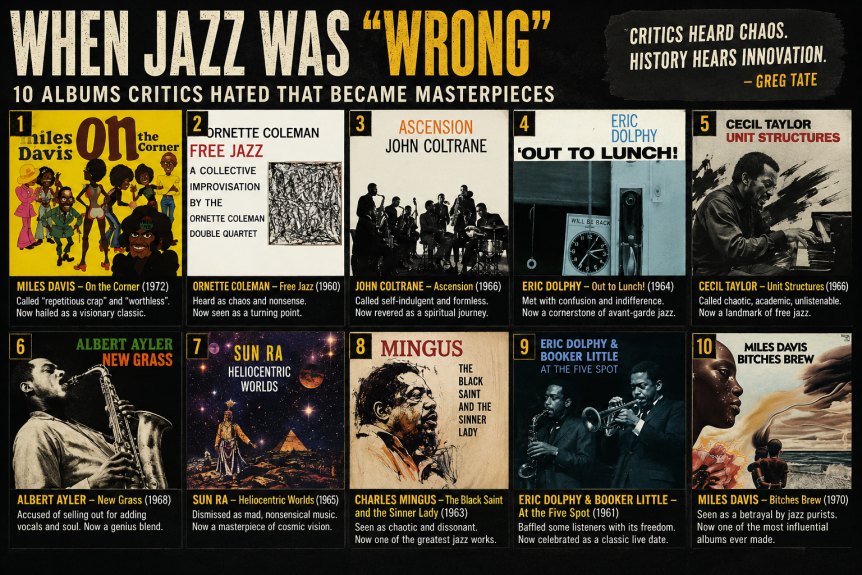
Jazz history is full of records that arrived to a chorus of boos. They were called chaotic, ugly, self-indulgent, or simply “not jazz.” Some confused listeners, angered critics, and others were practically buried by their own record labels. Decades later, many of those same records are considered landmarks—works that pushed jazz somewhere it had never been before.
From Charles Mingus and Sun Ra to Miles Davis and John Coltrane, these are the albums that challenged what jazz was supposed to sound like. They divided the jazz world and eventually proved that sometimes the music everyone calls “noise” is simply ahead of its time.
Miles Davis – On the Corner (1972)
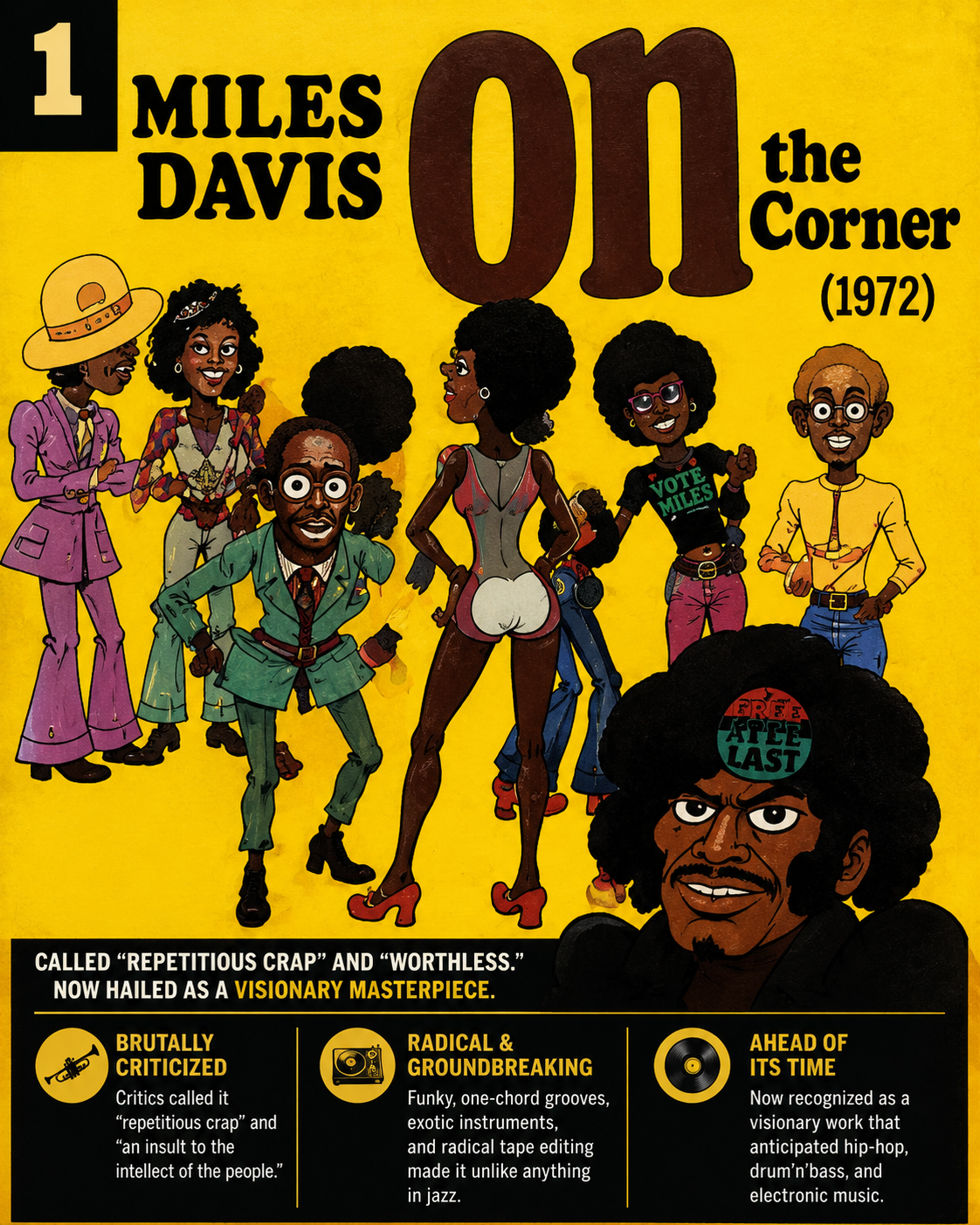
Perhaps no album in jazz history endured a more brutal reception than Miles Davis’s On the Corner. Within weeks of its release, it had become “the most vilified and controversial album in the history of jazz”. Critics called it “repetitious crap” and “an insult to the intellect of the people”. Even the musicians who played on it were bewildered—saxophonist Dave Liebman later admitted, “I didn’t think much of it”.
What made it so offensive? The album was a dense, funky, one-chord affair featuring an enormous rhythm section with tabla, sitar, and multiple keyboards. Davis barely played his trumpet. Producer Teo Macero employed radical tape-editing techniques, cutting and pasting performances into a collage that sounded like nothing else in jazz.
Jazz critics rejected it completely. Saxophonist Stan Getz proclaimed: “That music is worthless. It means nothing; there is no form, no content, and it barely swings”. The album bombed commercially, only reaching #156 on the Billboard charts.
Today? On the Corner is hailed as a visionary masterpiece that anticipated hip-hop, drum’n’bass, and electronica. DJ Spooky, Jah Wobble, and members of Radiohead and Sonic Youth have all cited it as a major influence. As Greg Tate put it: “It was the first hip-hop/house/drum’n’bass/breakbeat album I’d ever heard”.
Ornette Coleman – Free Jazz (1960)
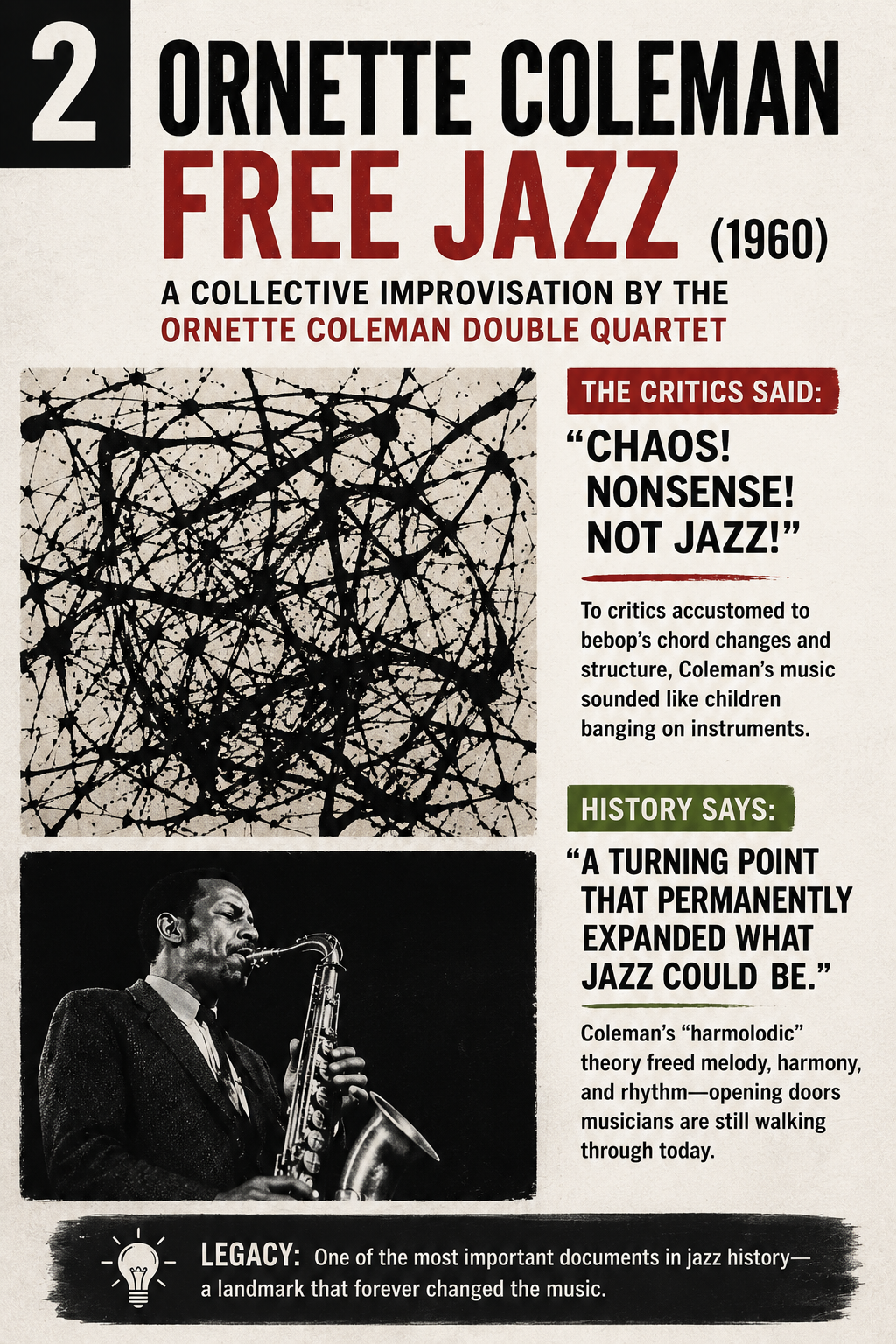
Ornette Coleman had already angered the jazz establishment with his earlier albums, but Free Jazzpushed things to a breaking point. The album featured a double quartet improvising simultaneously with no predetermined chord changes—a radical concept that seemed like pure chaos to many ears.
The title itself was a provocation. What did “free jazz” even mean? To critics accustomed to bebop’s intricate chord progressions, Coleman’s music sounded like children banging on instruments. His saxophone playing—with its vocalized cries and apparent disregard for harmony—seemed to reject everything jazz had built.
But Coleman was onto something profound. His “harmolodic” theory, which freed melody, harmony, and rhythm from traditional hierarchies, opened doors that musicians are still walking through. Today, Free Jazz is recognized as one of the most important documents in the music’s history, a turning point that permanently expanded what jazz could be.
John Coltrane – Ascension (1966)
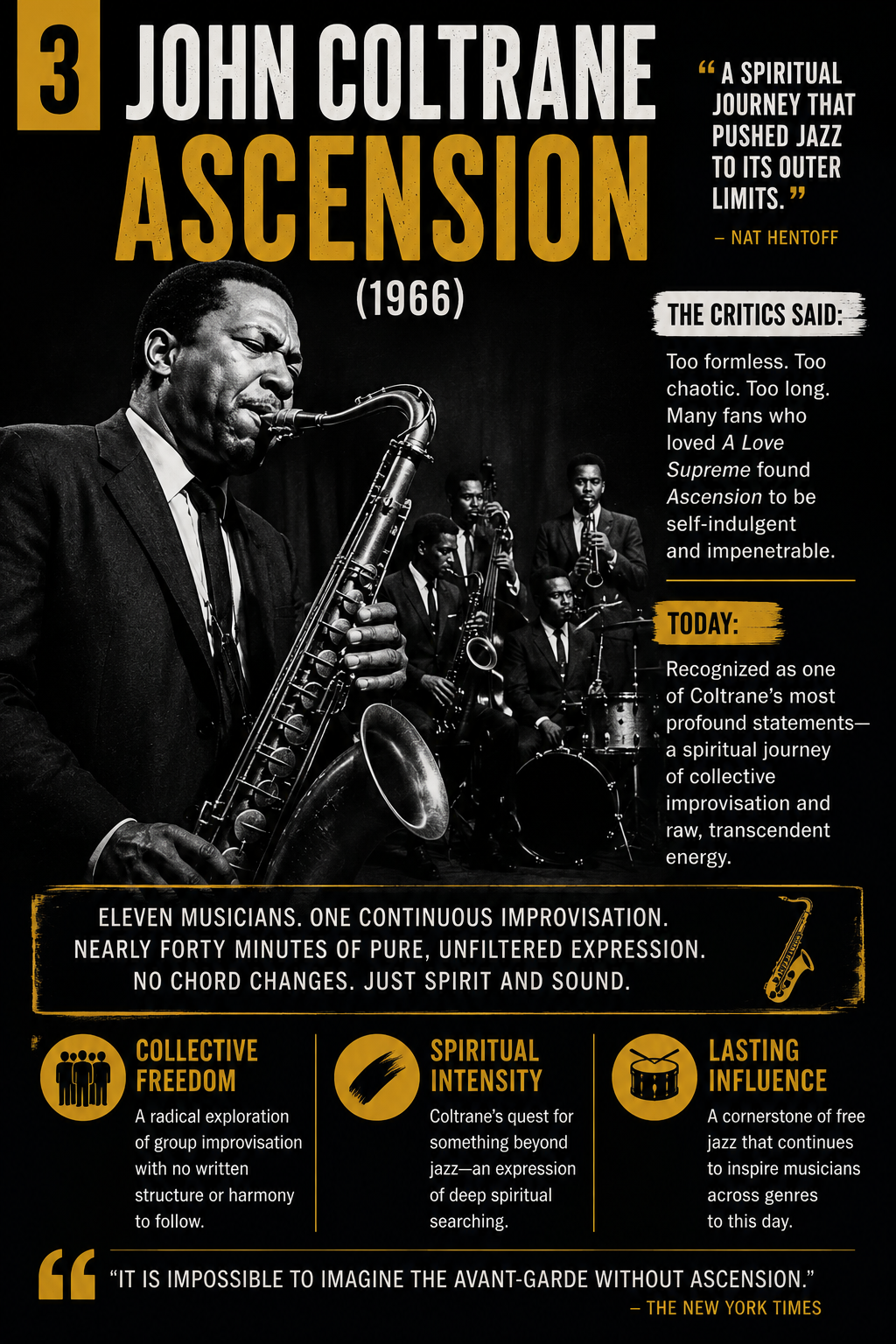
John Coltrane was already a jazz saint by 1966, but Ascension tested even his most devoted followers. The album featured eleven musicians improvising for nearly forty minutes in a dense, freewheeling collective improvisation. No written chord changes. No clear melodies. Just raw, spiritual energy pouring out of horns and drums.
For many fans who had embraced A Love Supreme (1965), Ascension seemed like a step too far. Critics called it self-indulgent and formless. Even sympathetic listeners struggled to find a foothold in its hurricane of sound.
Yet Ascension has since been recognized as one of Coltrane’s most profound statements—a spiritual journey that pushed jazz to its outer limits while maintaining a remarkable emotional coherence. Its influence on free jazz and avant-garde music is immeasurable.
Eric Dolphy – Out to Lunch! (1964)
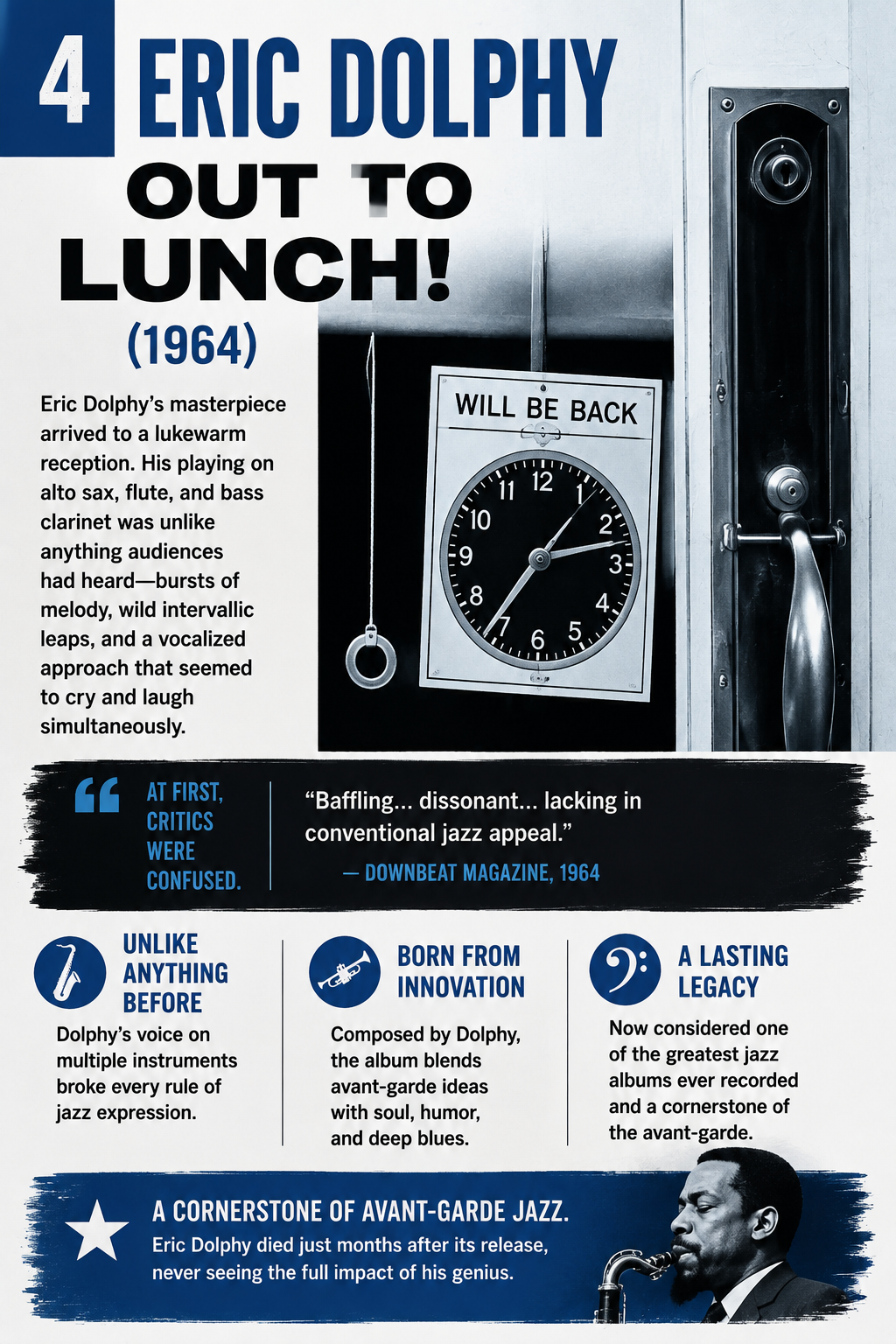
Eric Dolphy’s masterpiece arrived to a lukewarm reception. His playing on alto sax, flute, and bass clarinet was unlike anything audiences had heard—bursts of melody, wild intervallic leaps, and a vocalized approach that seemed to cry and laugh simultaneously.
Dolphy had already raised eyebrows playing with Charles Mingus, where his avant-garde style confused some of Mingus’s traditional fans. Mingus, who prized Dolphy’s expressive blend of bebop grounding, vocalized squeaks, and thoughtful playing outside standard harmony, understood him from every angle.
Out to Lunch! was Dolphy’s statement of purpose. It’s now considered one of the greatest jazz albums ever made, a cornerstone of the avant-garde. Tragically, Dolphy died just months after its release, never seeing its legacy unfold.
Cecil Taylor – Unit Structures (1966)
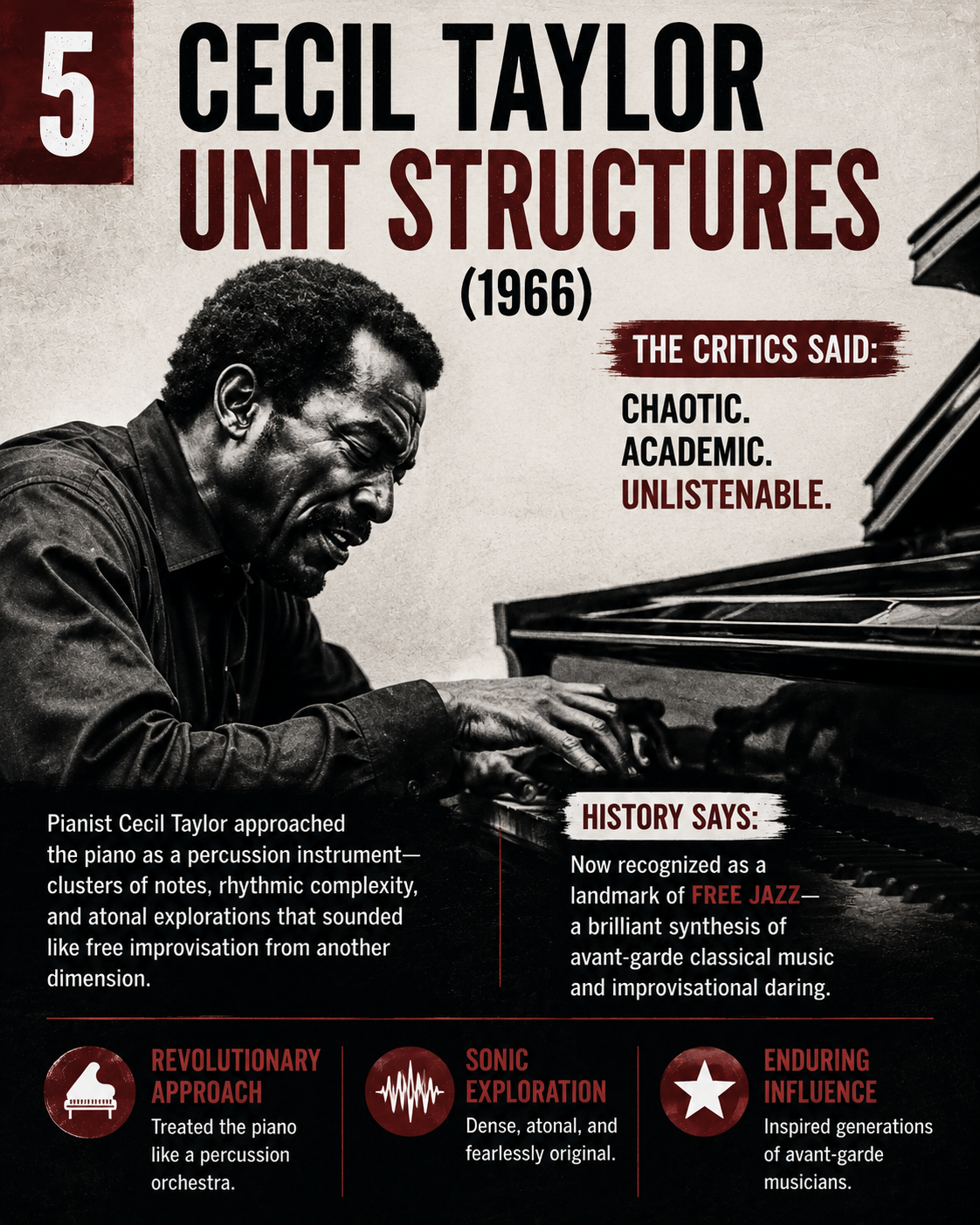
Pianist Cecil Taylor approached the piano as if it were a percussion instrument—clusters of notes, rhythmic complexity, and atonal explorations that sounded like free improvisation from another dimension. Unit Structures was his most ambitious statement yet, and most critics had no idea what to make of it.
Taylor’s music was called chaotic, academic, and unlistenable. Jazz fans accustomed to swing and melody found his dense, pointillistic approach alienating. Yet Unit Structures is now recognized as a landmark of free jazz, a brilliant synthesis of avant-garde classical music and improvisational daring.
Albert Ayler – New Grass (1968)
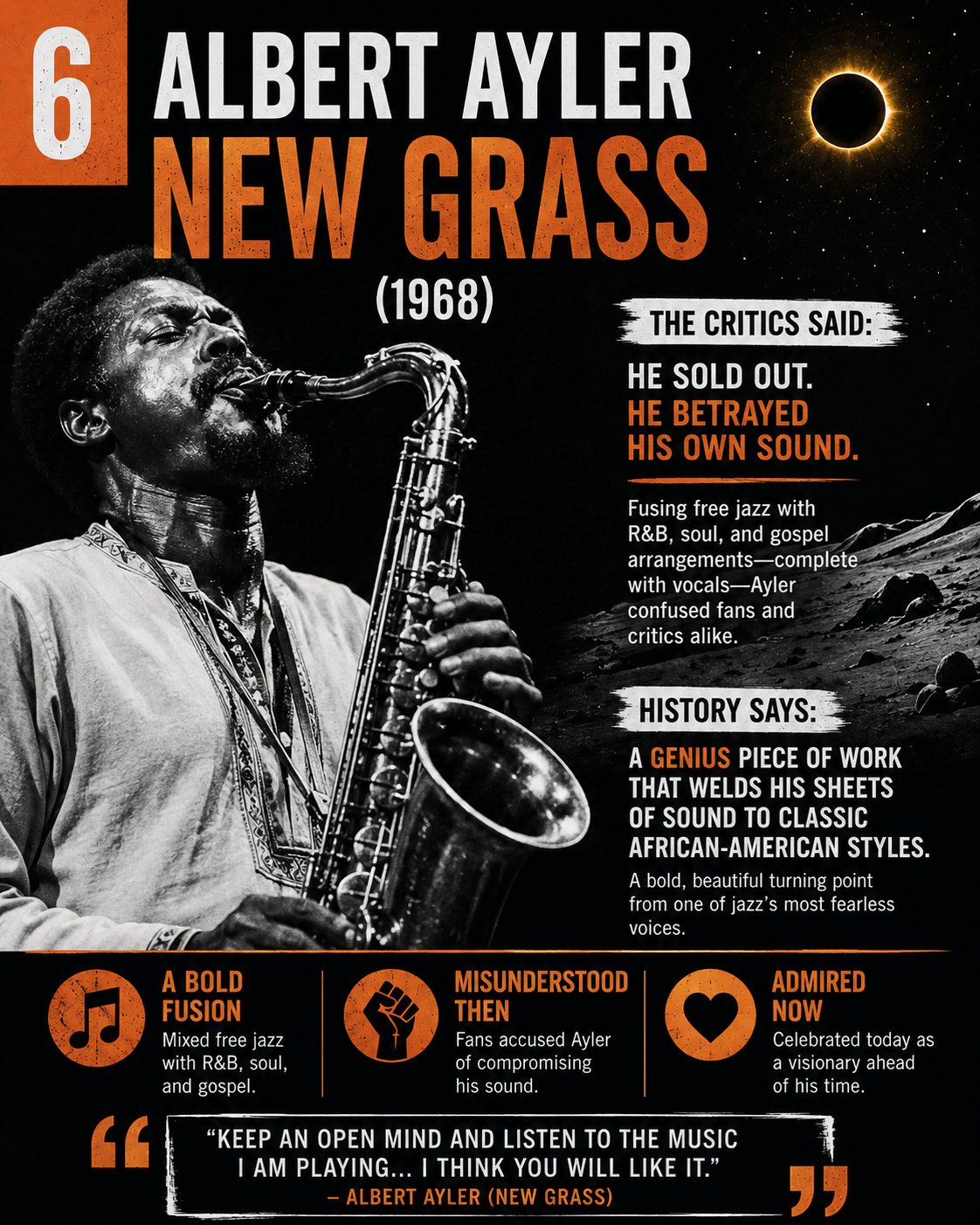
Albert Ayler’s music was always controversial. His ripping tenor sax produced “sheets of articulated squeals and buzzes that helped to revolutionize a new kind of jazz”. But when he released New Grass, his own fans turned on him.
The album fused Ayler’s free playing with R&B, soul, and gospel arrangements—complete with vocals. Critics and fans alike accused him of selling out. He even felt compelled to explain himself on the opening track, pleading with listeners to keep an open mind.
Time has been kinder. New Grass is now recognized as a “genius piece of work that welds his sheets of sound to classic African-American styles”. It shows an artist at a turning point, exploring new ways to express his vision.
Sun Ra – Heliocentric Worlds (1965)
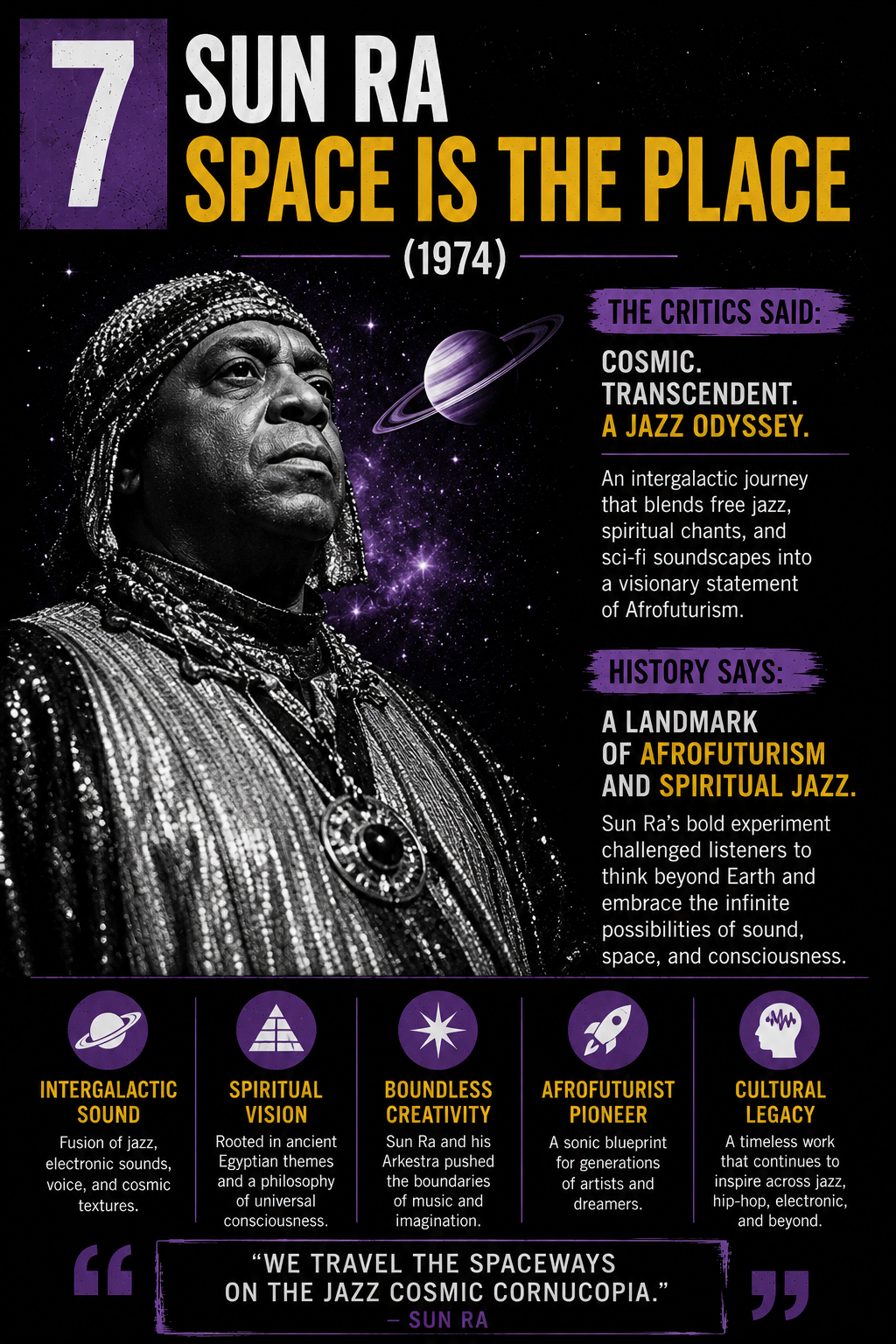
Sun Ra had been making strange, otherworldly music for years when Heliocentric Worlds arrived. But this album pushed his cosmic vision to new extremes—dissonant, percussion-heavy, and completely unconcerned with conventional notions of melody or swing.
Critics dismissed it as the ravings of a madman. But Sun Ra was always playing a longer game. His music, rooted in Afrofuturism and spiritual exploration, anticipated countless developments in avant-garde and experimental music. Heliocentric Worlds is now seen as a masterpiece of visionary creativity.
Charles Mingus – The Black Saint and the Sinner Lady (1963)
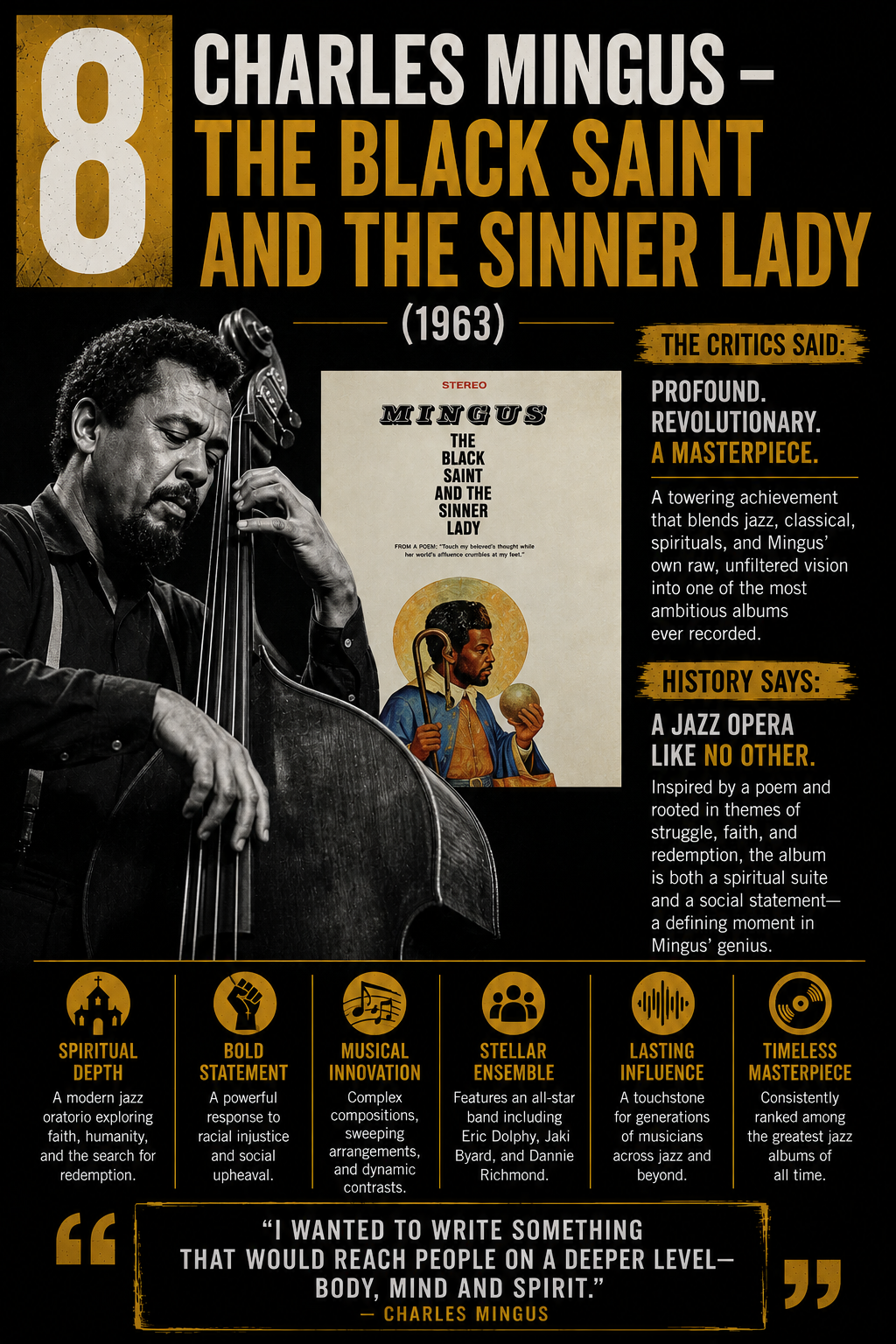
Even Charles Mingus, a composer of undeniable genius, wasn’t immune to critical confusion. The Black Saint and the Sinner Lady was his most ambitious work—a continuous, 40-minute suite for eleven pieces that blended written composition with collective improvisation.
The album sounded like nothing else in jazz. Its mix of dissonance, gospel, Latin rhythms, and raw emotional power confused critics accustomed to more conventional jazz structures. Mingus’s use of extended techniques and non-traditional harmonies struck many as chaotic.
Today, it’s widely considered one of the greatest jazz compositions ever recorded—a masterpiece of orchestration and emotional range that still sounds utterly original.
Eric Dolphy & Booker Little – At the Five Spot (1961)
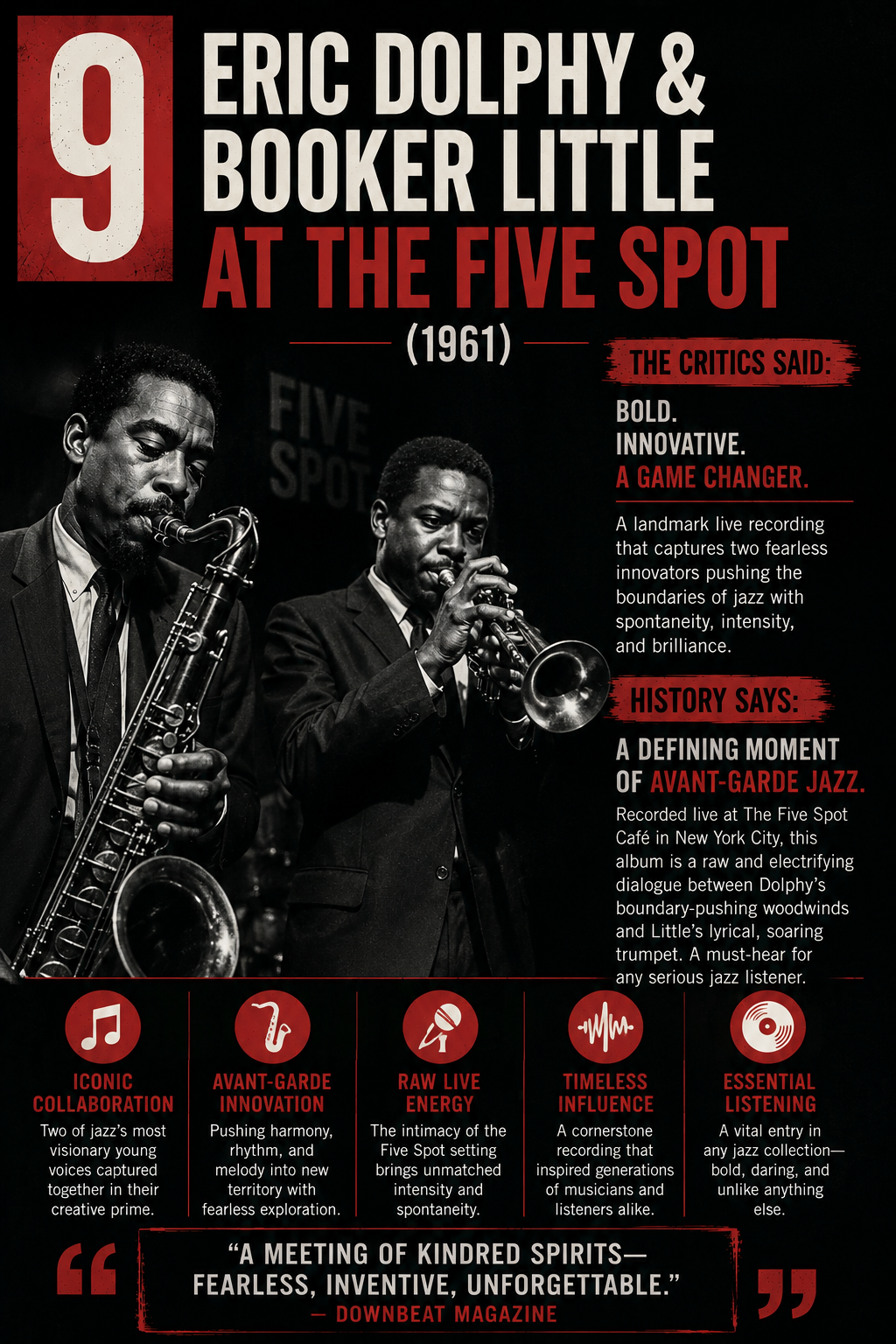
This live recording captured Dolphy and trumpeter Booker Little at their most freewheeling. Long versions of Little’s “Aggression” and the standard “Like Someone in Love” stretched out into adventurous territory that baffled some audience members.
Dolphy’s playing—whether on alto, bass clarinet, or flute—always defied categorization. At the Five Spot is now recognized as a classic, “one of that era’s best working bands”. Little, who died tragically young, is celebrated as “the first new voice on the trumpet to emerge after Clifford Brown”.
Miles Davis – Bitches Brew (1970)
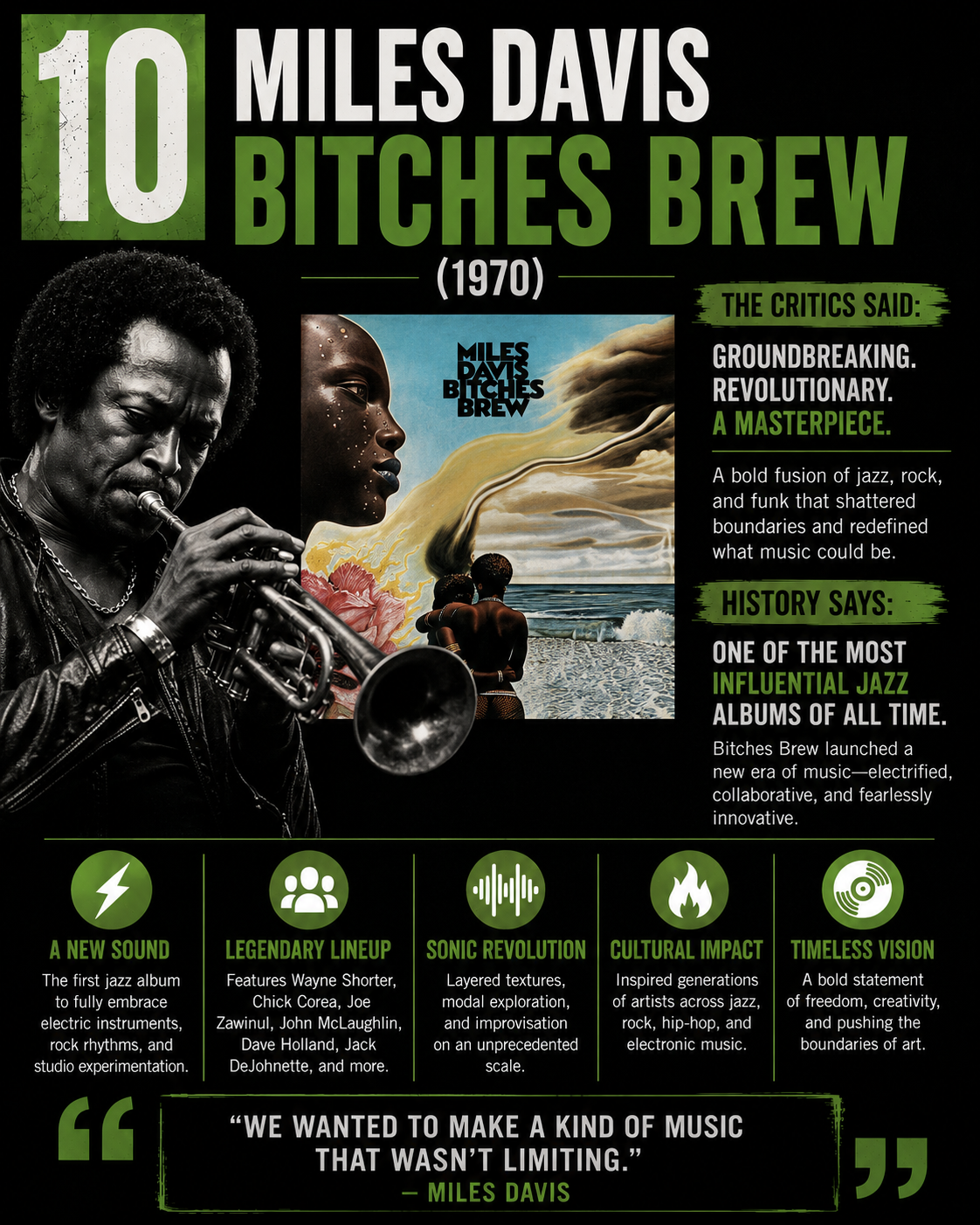
Wait—Bitches Brew was a commercial success, climbing to #38 on the Billboard charts. But among traditional jazz fans and critics, it was widely seen as a betrayal. Davis’s embrace of rock and soul rhythms was interpreted as a sellout, while pop fans were confused by its complexity.
Davis spent much of the 1970s being “loathed and misunderstood”. But time has proven him right. Bitches Brew is now recognized as one of the most influential albums in all of music—a fusion of jazz, rock, and funk that opened doors for countless musicians across genres.
What These Albums Teach Us
These ten albums share a common thread: they were ahead of their time. Critics heard chaos; history hears innovation. They heard noise; we hear genius.
The musicians on these records were asking questions that audiences weren’t ready to hear. What if jazz didn’t need chord changes? What if it could absorb rock, funk, and world music? What if it was less about entertainment and more about spiritual expression?
As one critic noted about Miles Davis’s electric period, “After listening with modern ears… it’s hard to understand what all the fuss was about”. That’s the gift of history: it gives us the distance to hear these albums as their creators intended.
Are there albums you’ve dismissed that might be worth revisiting?
The next time you hear a jazz record that sounds like “noise,” ask yourself: is it genuinely bad, or is it simply ahead of its time? Some of history’s greatest music was written off in its own era. These ten albums are proof that the music everyone calls “noise” might just be the future in disguise.