Part II — Art Deco Ascendant (1930–1933)
11. 40 Wall Street (1930)
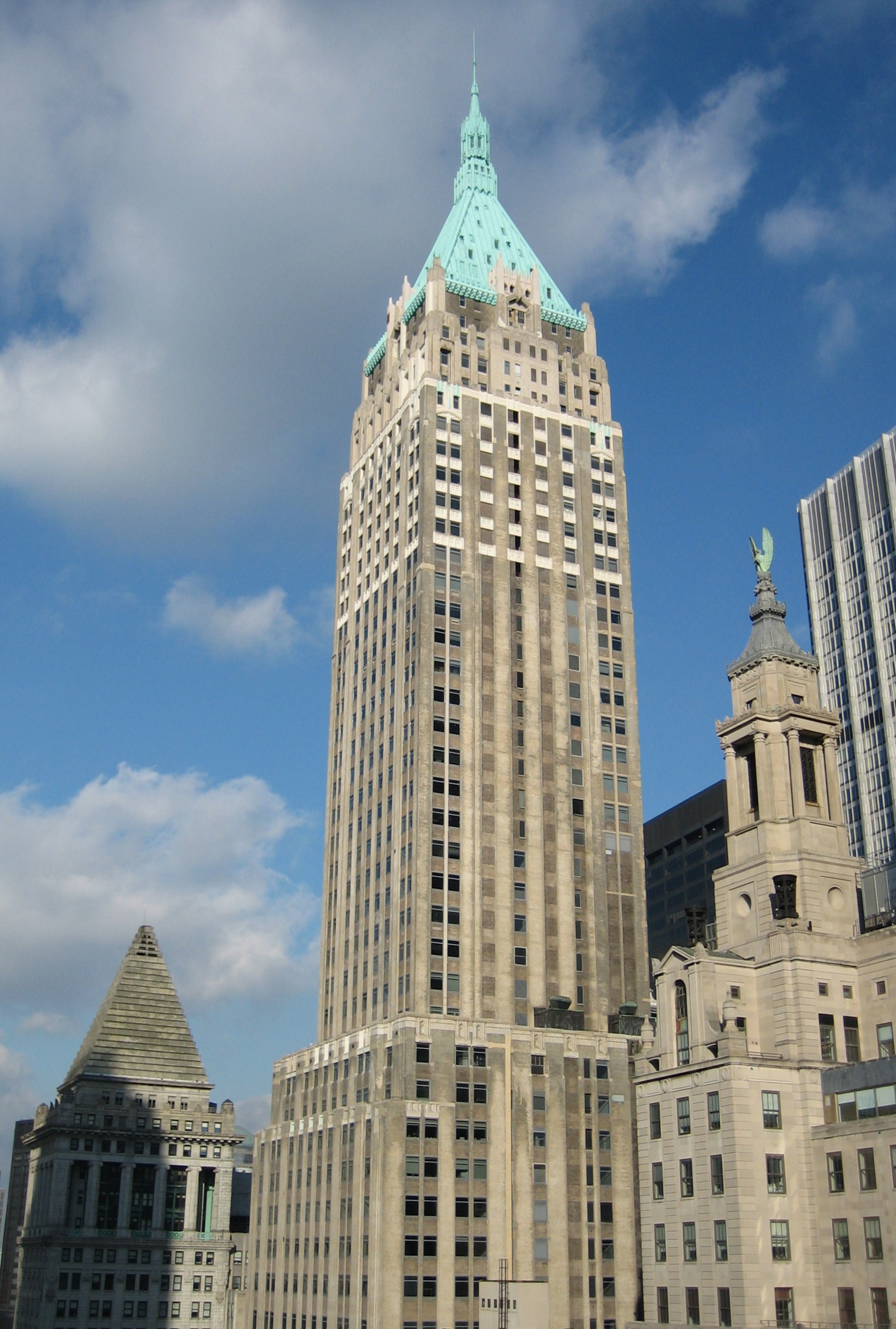
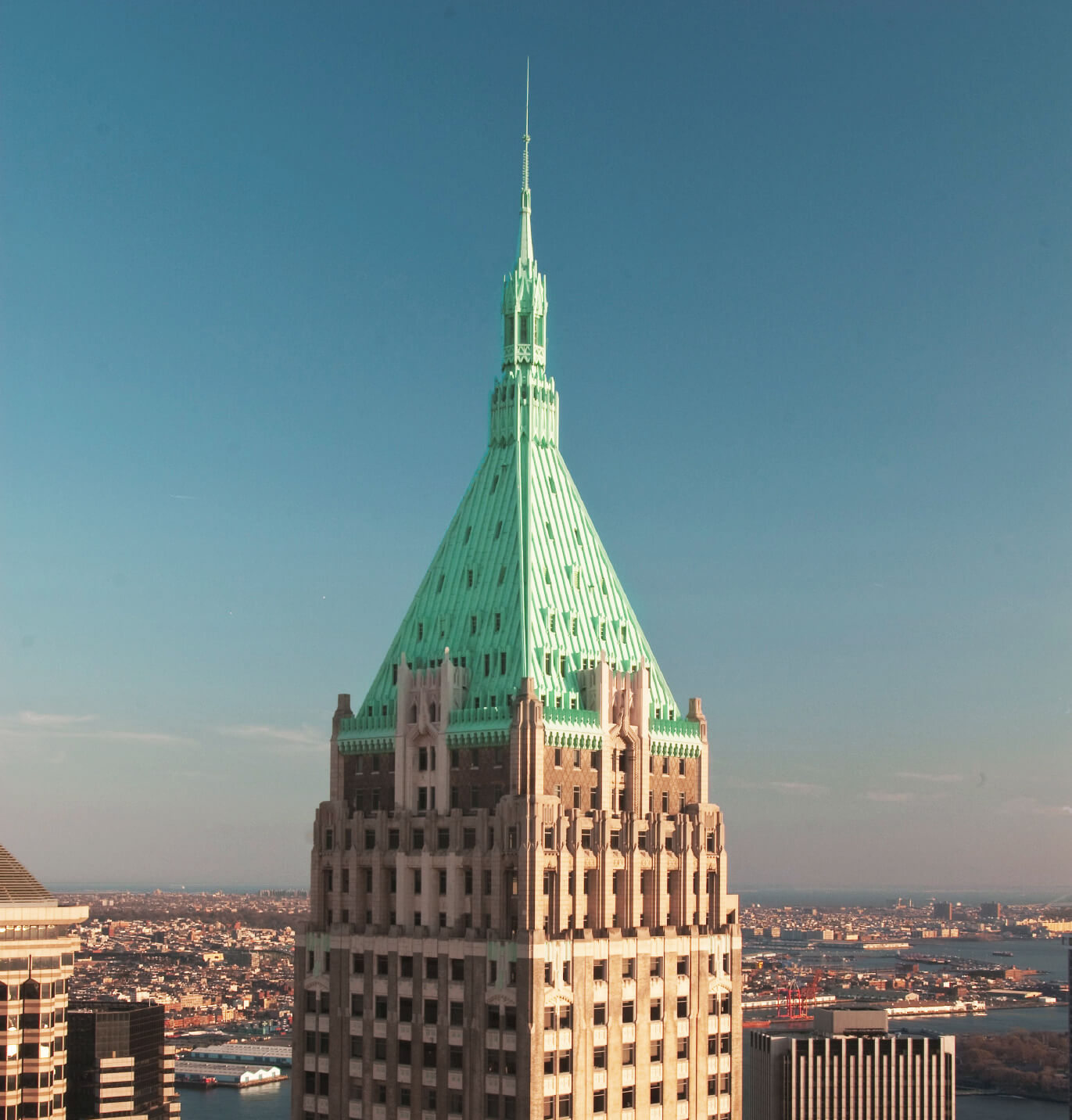
Designed by H. Craig Severance for the Bank of Manhattan Trust Company, 40 Wall Street was conceived as a direct challenge to rival skyscrapers rising across the city. For a brief moment, it claimed the title of the world’s tallest building—an achievement celebrated and eclipsed almost immediately.
Its Art Deco design emphasized speed and vertical thrust, with a slender spire that symbolized financial power during the late 1920s banking boom. The building captures the intensity of corporate rivalry that defined Manhattan on the eve of the Depression.
12. Chrysler Building (1930)


William Van Alen’s Chrysler Building, commissioned by automobile magnate Walter P. Chrysler, remains the most celebrated Art Deco skyscraper in the world. Its stainless-steel crown, sunbursts, and automotive gargoyles transformed industrial motifs into architectural ornament.
Built secretly to surpass 40 Wall Street in height, the Chrysler Building turned the skyscraper race into architectural theater. More than a corporate headquarters, it became a permanent emblem of New York’s glamour, confidence, and design ambition.
13. Daily News Building (1930)


Designed by Raymond Hood for the Daily News Corporation, this building introduced a bolder, more functional interpretation of Art Deco. Its clean lines and massive scale reflected the power of mass media in shaping public opinion.
Inside, the famous rotating globe in the lobby symbolized global reach and immediacy. The Daily News Building marked a shift toward skyscrapers as instruments of information, not just finance.
14. Empire State Building (1931)


Designed by Shreve, Lamb & Harmon and developed by Empire State Inc., the Empire State Building was constructed in just over a year—an unmatched feat of speed and coordination. Rising 102 stories, it instantly became the tallest building in the world.
Its Art Deco styling is restrained but powerful, emphasizing mass, symmetry, and scale. Built during the Great Depression, it embodied faith in the future at a time when optimism was in short supply.
15. McGraw-Hill Building (1931)


Raymond Hood designed the McGraw-Hill Building as part of Rockefeller Center, blending Art Deco ornament with emerging modernist principles. Its green terra-cotta façade distinguished it from its limestone neighbors.
The building represents a transition moment—where decoration began to give way to clarity, efficiency, and abstraction. It is both Art Deco and a precursor to International Style modernism.
16. One Wall Street (1931)

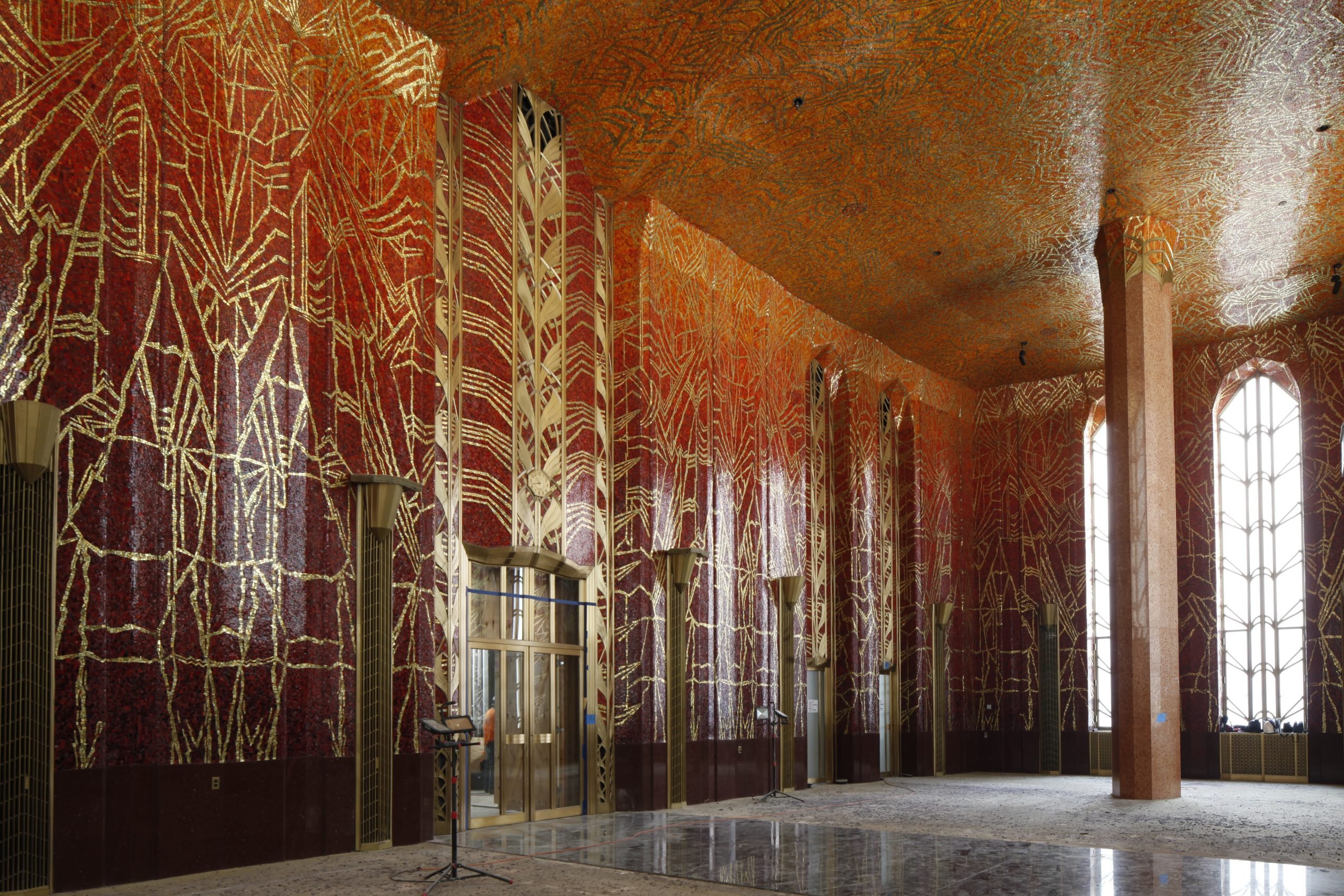
Designed by Voorhees, Gmelin & Walker for Irving Trust Company, One Wall Street brought Art Deco refinement to Lower Manhattan. Its limestone façade conveyed solidity and confidence at a moment of financial uncertainty.
Inside, the famed Red Room showcased mosaic artistry at a level rarely matched in commercial buildings. One Wall Street demonstrated that banks could be both conservative and architecturally adventurous.
17. General Electric Building (1931)
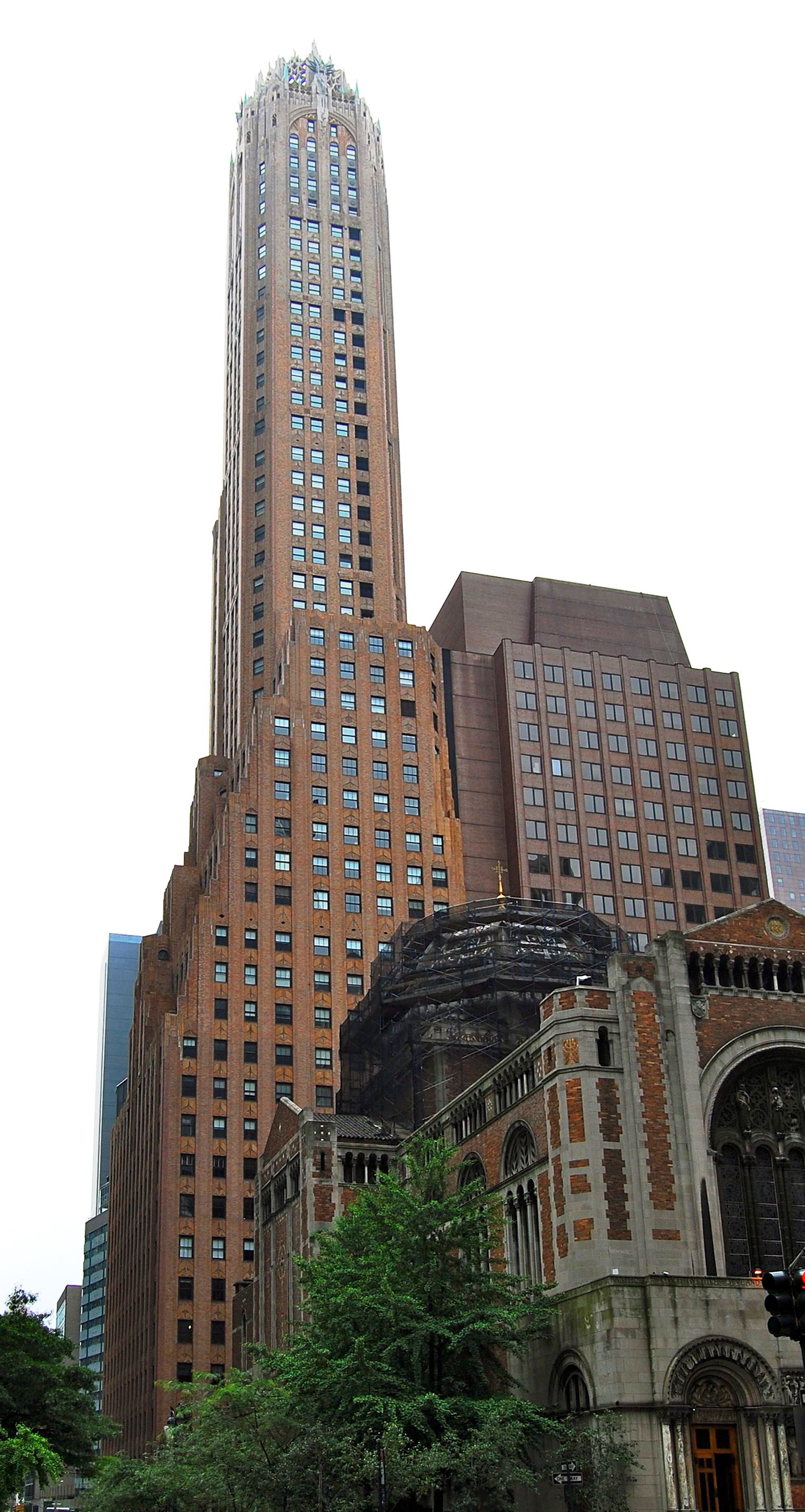
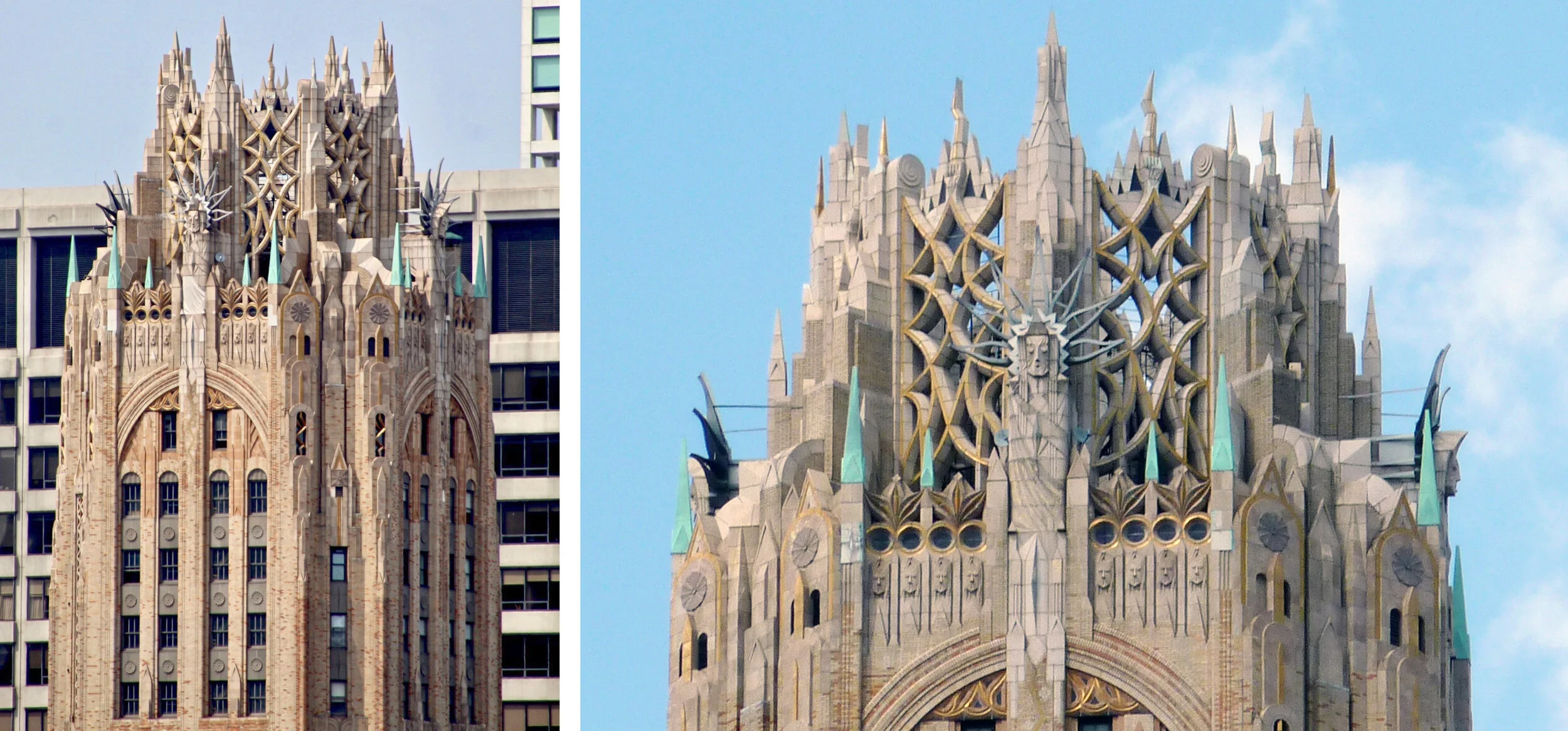
Designed by Cross & Cross for RCA and General Electric, this tower merged Gothic verticality with Art Deco geometry. Its setbacks and ornament symbolized radio waves and broadcast technology.
The building stands as a monument to early mass communication, translating invisible signals into physical form. It remains one of Midtown’s most distinctive silhouettes.
18. 70 Pine Street (1932)


Clinton & Russell designed 70 Pine Street for the Cities Service Company as a dramatic limestone tower rising from the Financial District. Its narrow footprint and soaring crown emphasized vertical elegance.
Often overshadowed by Midtown giants, 70 Pine Street remains one of downtown’s finest Art Deco achievements, combining corporate ambition with architectural drama.
19. 30 Rockefeller Plaza (1933)


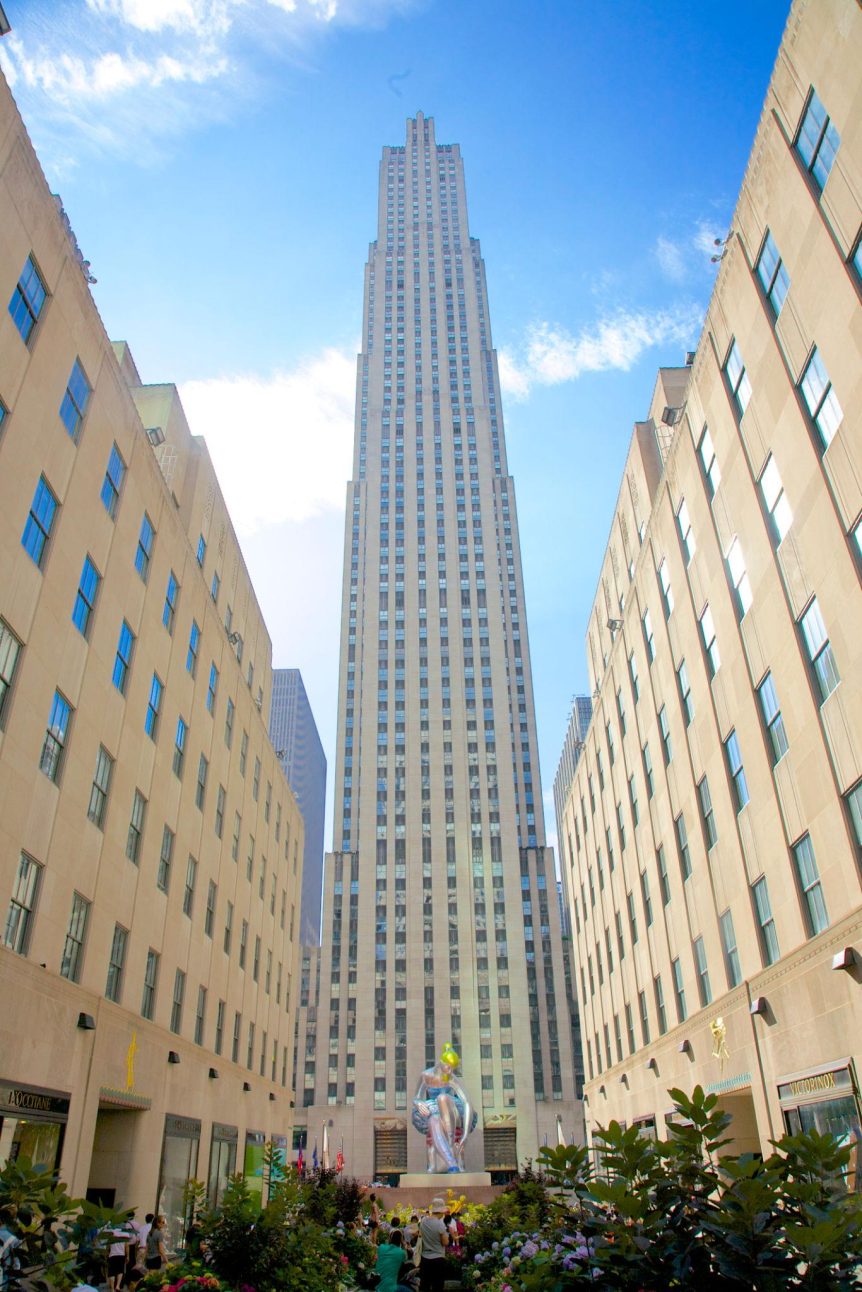
The centerpiece of Rockefeller Center, 30 Rockefeller Plaza was designed by Raymond Hood as the anchor of the largest private development in American history. Built during the Depression, it represented confidence on an unprecedented scale.
Its Art Deco reliefs, setbacks, and integration with public plazas redefined how skyscrapers could interact with the city. Rockefeller Center wasn’t just a building—it was a new urban model.